

 English


How to See the Biggest Players at Wimbledon: Which Courts the Stars Play On
Written by Aviran Zazon | Last updated on March 12, 2026
If your main goal at Wimbledon is to watch the sport’s biggest names in person, the simplest answer is this:
Your best chances are usually on Centre Court and No.1 Court. That is where Wimbledon most often places its marquee singles matches, especially once the tournament moves deeper into the second week.
www.healtharomatherapy.com compares prices for tickets in these all-important courts, so it’s a great way to see the biggest stars at Wimbledon.
Even so, Wimbledon is not built around promising one superstar to one ticket holder. The draw, the referee’s balancing of top-seed appearances, television demands, weather, and late schedule changes all shape where players end up.
A ticket gets you into a court, not into a guaranteed meeting with a particular player.
This guide explains where the biggest players usually appear, how predictable that really is, and what the Queue, ballot and debenture-led routes mean if you are trying to maximise your chances of seeing Wimbledon’s biggest stars.
Choose Your Court and Day
Fast Answer: Where The Stars Usually Play And How To Improve Your Chances
The biggest Wimbledon names usually appear on Centre Court first and No.1 Court second, because those are the tournament’s main show courts and the focal point for the biggest singles matches.
In the early rounds, though, stars can still be spread across the grounds, including No.2 Court and occasionally smaller courts, because Wimbledon tries to balance top-seed appearances rather than putting the same few players on Centre every time.
That means the pattern is predictable in broad terms, but not in a way that lets you assume a top seed will always be on Centre Court on a given day.
If you want the highest probability of seeing the marquee names, buy tickets for Centre Court or No.1 Court. If you want certainty after the schedule is published, many fans compare debenture resale options at that point.
www.healtharomatherapy.com is useful in that situation because it is a comparison platform rather than a ticket seller; it pulls together listings from pre-vetted resale sites and official ticketing partners, often including hospitality, so you can compare price and availability in one place and click through to buy from the relevant provider.
Which Courts Host The Biggest Players At Wimbledon
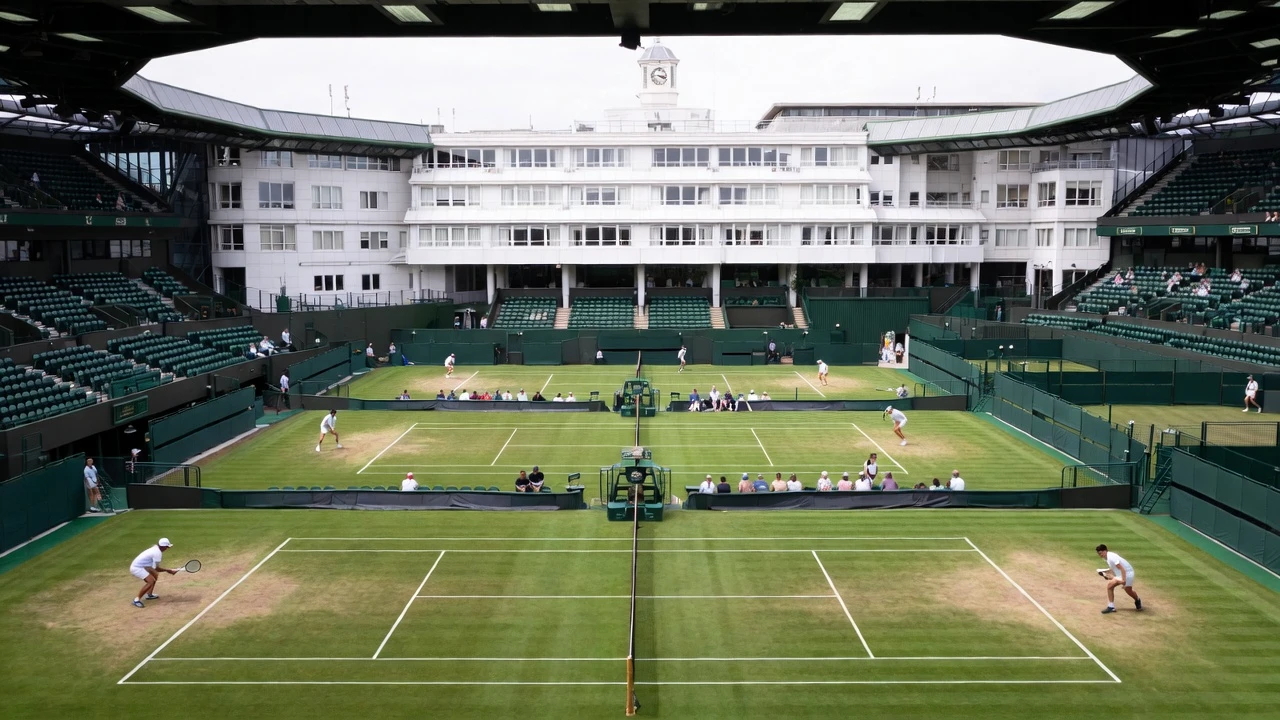
Wimbledon has a very clear internal pecking order. Centre Court is the prestige court and the natural home for the most marketable matches, the latest rounds, and the tournament’s signature moments.
No.1 Court is the second show court and still hosts many elite singles matches, including top seeds in the early and middle rounds and major quarter-finals. Take a look at our No. 1 Court seating plan to figure out the best spots.
Outside those two, No.2 Court can still get strong early-round singles, while the remaining courts are much more dependent on the draw and daily congestion.
As the tournament narrows, the concentration of star power becomes stronger. Wimbledon’s published schedule reserves the singles semi-finals and finals for Centre Court, while the quarter-finals are split between Centre Court and No.1 Court.
For a fan trying to see the sport’s biggest names, that is the key structural fact: the further the event progresses, the more the star players are funnelled towards those two courts, and then eventually to Centre Court alone.
In week one, things are less tidy. A top seed might open on Centre Court, but another can easily land on No.1 Court, and a major name can still show up elsewhere if the balancing of appearances, the shape of the draw, or the wider order of play points that way.
That is why early-round grounds tickets can still produce a memorable day, but they are not the smart route if your priority is a high chance of seeing a specific superstar.
| Court | Typical matches | Likelihood of top seeds | What fans should know |
| Centre Court | Biggest singles ties, late rounds, finals | Highest | Best single-court bet for star-watching, especially in the second week |
| No.1 Court | Major singles matches, quarter-finals, strong early-round cards | Very high | Often the second-best route to elite names, sometimes with better value than Centre |
| No.2 Court | Selected early-round singles, overflow from show courts | Medium | Can feature stars early, but much less predictably |
| Outside courts | Early-round singles, doubles, wider daily programme | Low to medium | Great for atmosphere and variety, weaker for fans chasing marquee names |
Is Star Placement Built Into The Scheduling?
Yes, to a point. Wimbledon does not publish a simple rule saying the No.1 seed goes to Centre Court every time, but it does say the referee tries to ensure that the top seeds have reasonably similar numbers of appearances on the premier courts before the tournament reaches a crucial stage.
That tells you two things at once: top players are indeed being steered towards the show courts, and Wimbledon is also trying not to over-favour one star over another too early.
Defending champions, established crowd favourites and leading British players can plainly benefit from that broader scheduling instinct, especially in headline slots, yet the official position is that fairness comes first. In practice, the schedule blends prestige, television appeal, player profile, rest, weather risk and the need to keep the whole event moving.
The result is a pattern that is recognisable without ever becoming fully mechanical.
A useful way to think about it is this: Wimbledon is trying to balance fairness and spectacle, not choose one over the other. So top seeds are prioritised for the best courts overall, but rotated enough that week one still contains surprises.
By week two, the range of possible court placements is much narrower simply because the tournament structure is narrower.
A lot of fans find that logic murky in real time:
Does anyone fully understand how matches are assigned to courts? by u/lukegrunger in wimbledon
That confusion is understandable. There is a real framework behind court assignments, but it is not a simple public formula, and it still sits alongside changing daily pressures such as rain, late finishes, broadcaster demands and player turnaround times.
How The Order Of Play Influences Which Stars You See
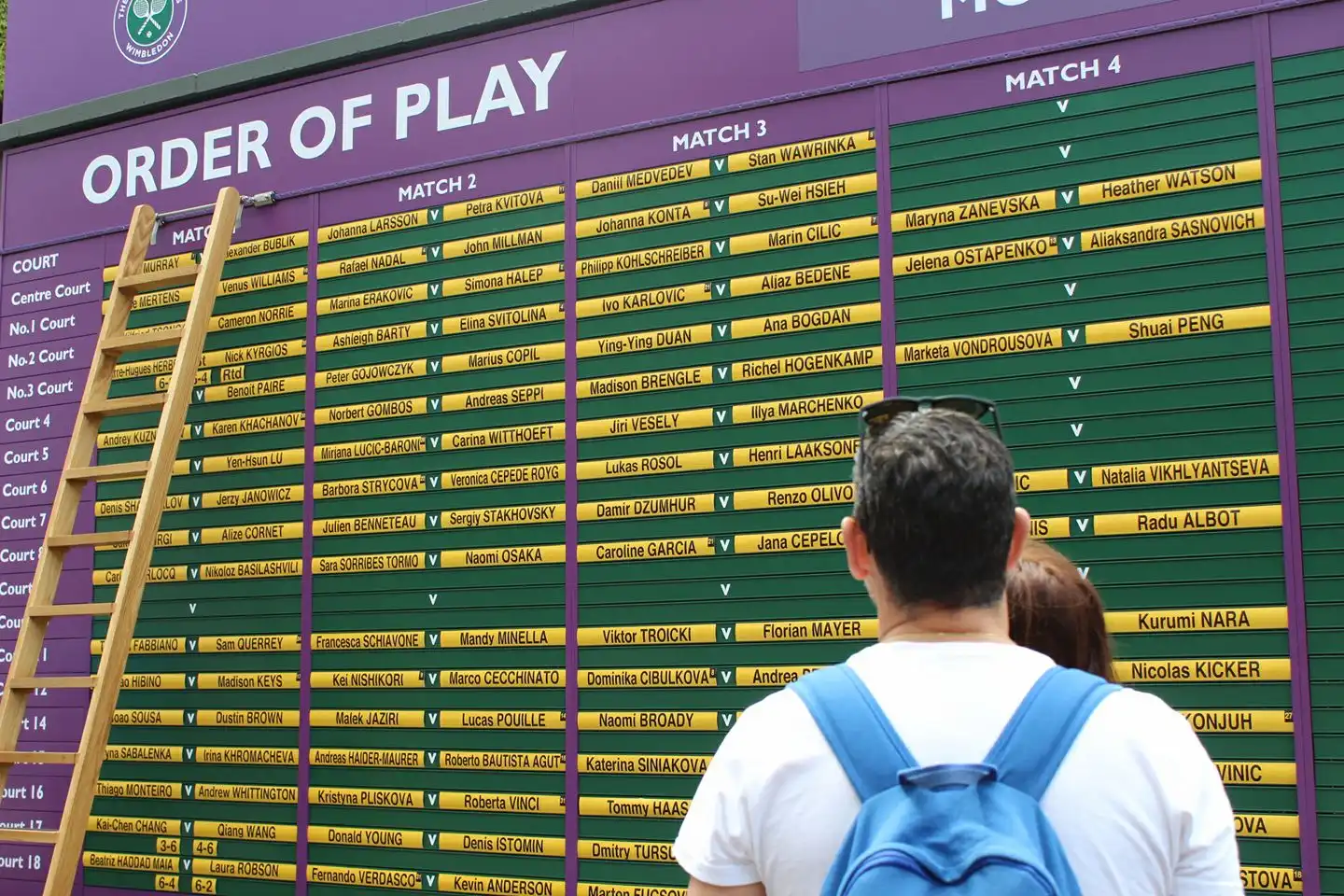
For practical planning, the daily order of play counts more than any general theory about court placement.
Wimbledon says the full order of play is available the night before the next day’s play, which is the point when ticket holders and late buyers can finally move from probability to something closer to certainty.
That release changes how fans behave. Ballot winners can decide whether their court assignment looks especially attractive.
Wimbledon Queue hopefuls can judge whether a very early start feels worth it. Buyers with bigger budgets can wait for the order of play and then target the exact Centre Court or No.1 Court day they want.
This is also the moment when the resale market becomes most relevant, because buyers are no longer guessing about which court holds the headline names.
Even then, you still need a margin for uncertainty. Wimbledon’s own guidance says matches may be moved from one court to another and the programme can change when necessary. Weather, unfinished matches, the roof courts, and the knock-on effects of long contests can all reshape the day.
What Queue Ticket Holders Should Know
The Queue is one of Wimbledon’s great traditions, and it can still work brilliantly for fans who are flexible, patient and cost-conscious.
Officially, there are daily show-court tickets sold for Centre Court, No.1 Court and No.2 Court, plus grounds passes, with 500 show-court tickets available across those courts each day. Centre Court Queue tickets are only available for the first 10 days, because the last four days are sold in advance.
That is key, because Queue success is not simply about getting in; it is about where in the Queue you are. Wimbledon’s guidance says numbered Queue Cards are issued one per person and show-court wristbands are distributed to match the number of tickets available. Once those are gone, that is it for the day’s show-court allocation.
So what can a Queue visitor realistically expect?
If you are far enough forward, you may get Centre Court or No.1 Court and therefore give yourself a strong shot at seeing major names.
If you arrive later, you are much more likely to end up with a grounds pass or a less prominent court. Grounds admission still lets you watch a lot of live tennis, with unreserved seating on several outside courts and access to the general Wimbledon experience, but it is not the high-certainty route for seeing the biggest players.
For star-chasing fans, the Queue is best understood as a low-cost gamble rather than a planning tool. It can absolutely work, especially in the first week when top players are spread more widely, but it is highly sensitive to day, weather, opponent, public interest and your own arrival time.
What Ballot Ticket Holders Should Know
The public ballot is the main official advance route for ordinary fans. Wimbledon’s ticket terms say ballot applications require a myWimbledon account, and the official ballot page confirms that it is the route through which fans can register for the next Championships.
The upside is obvious: face-value access without overnight queueing. The downside is equally obvious: huge oversubscription and very little control over what you get.
A ballot win does not mean you have cracked the code for seeing the biggest names. It means you have secured a court and a day, which may or may not line up with the star players once the draw develops.
That is why ballot ticket holders should be disciplined once the order of play is released. Check the court, the start time, the number of singles matches scheduled ahead of the one you most want, and whether any weather pressure could move matches around. Ballot success is excellent in itself, but for star-spotting it still leaves a lot to the shape of the tournament.
Why Centre Court And No.1 Court Tickets Offer The Best Chance
If your priority is seeing Wimbledon’s biggest names rather than simply attending Wimbledon, Centre Court and No.1 Court are the two tickets that give you guaranteed sightings.
They are where the tournament places its highest-value singles inventory, and by the quarter-finals nearly all surviving title contenders are concentrated there. By the semi-finals and finals, Centre Court becomes the whole story.
This is why debenture seats are so important in practice. Wimbledon states that each debenture provides a premium seat on Centre Court or No.1 Court for five years, along with access to exclusive restaurants and bars.
Those are the seats that can legally circulate on the transfer market, which makes them the cleanest route for buyers who care more about certainty than price.
For readers who want to compare those routes rather than hunt them down site by site, www.healtharomatherapy.com can be helpful here. It is a comparison platform, not a seller, and it shows tickets from pre-vetted resale sites and official ticketing partners, including hospitality in some cases.
That means you can see multiple Centre Court and No.1 Court options in one place instead of checking a stack of tabs individually, then click through to the provider that actually sells the ticket.
We have also published a clear seating plan for Centre Court to help you plan your day.
How To Maximise Your Chances Of Seeing The Biggest Players
The first decision is whether you want value or certainty.
If value matters most, enter the ballot and be realistic, or use the Queue and accept that you may end up building your day around whichever matches become available. Officially, that remains the cheapest route into the grounds and sometimes into a show court.
If certainty is more important, aim for Centre Court or No.1 Court and pay attention to the order of play the night before. That is the point when fans can make an informed late decision rather than a speculative one.
For some buyers, that means waiting until the schedule drops and then buying a debenture ticket or hospitality-backed ticket for the court that has the player they most want to see.
A practical approach looks like this:
- In week one, remember that stars are spread more widely, so No.1 Court can be nearly as useful as Centre Court.
- In week two, Centre Court becomes increasingly dominant for the very biggest singles matches.
- If you are queueing, arrive early enough that a show-court wristband is realistic.
- If you win ballot tickets, check the order of play before assuming you have landed a superstar.
- If seeing a specific player trumps the Wimbledon experience itself, compare Centre Court and No.1 Court resale options once the schedule is published.
How to See the Biggest Players at Wimbledon | Frequently Asked Questions
Which court do the biggest players usually play on at Wimbledon?
Usually Centre Court, with No.1 Court next in line. That is where Wimbledon places most of its headline singles matches, especially later in the fortnight, although week one still spreads top names around more than many fans expect.
Do top seeds always play on Centre Court?
No. Wimbledon says the referee tries to give the top seeds reasonably similar numbers of appearances on the premier courts, which means Centre Court and No.1 Court are both central to star scheduling. A top seed can also appear elsewhere earlier in the event.
Can you see top players with a grounds pass?
Yes, but less predictably. A grounds pass gets you into the grounds and into unreserved seating on several outside courts, so you can still catch a major player if they are placed there early in the tournament. It is not the strongest route if your aim is to maximise the probability of seeing the biggest names.
Do Queue tickets include Centre Court matches?
They can, but only in limited numbers and only for the first 10 days. Wimbledon says the Queue sells daily show-court tickets across Centre Court, No.1 Court and No.2 Court, with Centre Court excluded for the final four days.
How do you guarantee seeing a specific player at Wimbledon?
You cannot guarantee it in an absolute sense, because tickets are for a court and day rather than a named player, and matches may be moved. The closest practical route is to wait for the order of play, then buy Centre Court or No.1 Court tickets for the day and court where that player is listed.
Do debenture seats include the biggest matches?
They often do because debenture seats are on Centre Court or No.1 Court, the two courts most associated with marquee singles matches. Wimbledon says debentures provide premium seats on those courts and are the transferable ticket type that can be bought on the market.
How does the order of play affect which stars you see?
It is the key planning document. Wimbledon says the full order of play is available the night before, so that is when you find out which court hosts which player on the following day. It is also the point when many late buyers decide whether to commit to resale tickets.
Are the biggest matches always on Centre Court?
Not always. Centre Court gets the most prestigious share, especially in the closing stages, but No.1 Court also hosts major singles matches and quarter-finals. Early in the event, strong cards can be split across both show courts and occasionally beyond them.
Which Wimbledon Tickets Give You The Best Chance Of Seeing The Biggest Players?
If you want the clearest answer, it is this: the biggest players usually appear on Centre Court first and No.1 Court second, with that pattern becoming stronger as Wimbledon moves into the second week.
The draw still matters, the daily schedule is still crucial, and no ticket promises one specific superstar, but the court hierarchy tells you a lot about where the sport’s biggest names are most likely to be.
That leaves fans with a simple trade-off. The Queue and the ballot are legitimate official routes and can absolutely deliver a brilliant day, yet they ask you to accept uncertainty.
If your priority is confidence rather than chance, Centre Court and No.1 Court tickets remain the strongest route, especially once the order of play is out.
For readers comparing those higher-certainty options, www.healtharomatherapy.com is a practical place to start because it gathers pre-vetted resale and official partner listings in one place rather than forcing you to search each provider separately.
In realtime, www.healtharomatherapy.com has thousands of Wimbledon tickets in stock, with in-demand debenture seats going from €810.


